 Patient Portal
 Pay My Bill
 Contact Us
Patient Stories
Apr 29, 2026
She Looked Fine, but She Wasn’t: How a CSF Leak Changed Everything
Hayley Reid will never forget the date. It was May 5, Cinco de Mayo, and she was excited for the day. With just a few days before returning to work after maternity leave, Hayley was right in that in-between stretch where you try to feel like yourself again before the pace of work life picks back up. So, she knocked out her to-do list: nails, barre, and chiropractor. Afterward, she and her husband, Robbie, were planning to go out to dinner. Her plans were interrupted by intense pain.
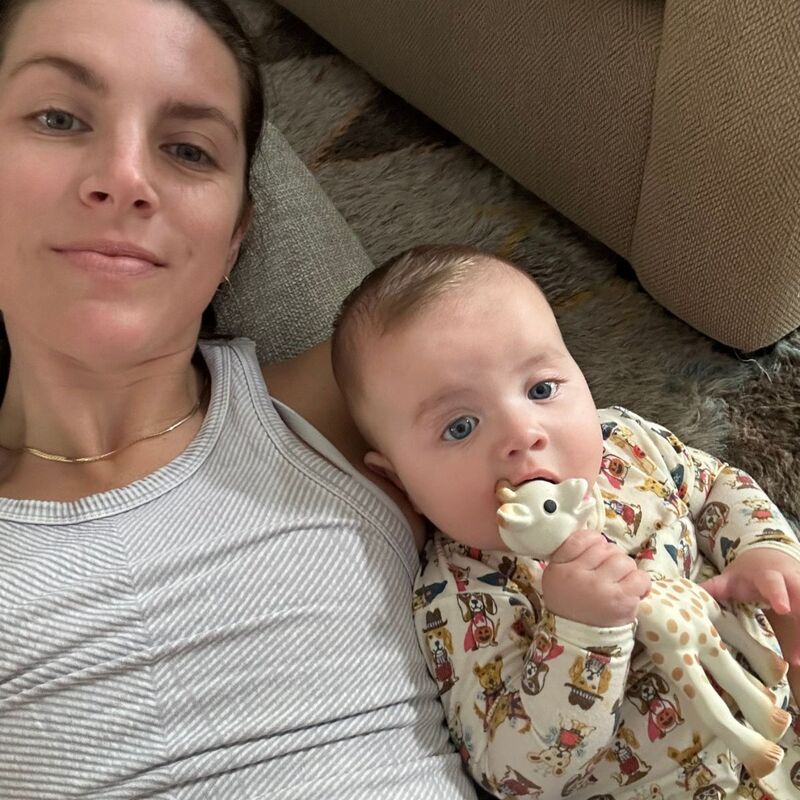
"I felt like I got hit by a freight train," she says. "My ears, my head, my eyes." She went to lie down and waited for it to pass the way headaches do. By the next two mornings, her symptoms were the same. Over the weeks that followed, things only got worse. The pressure in her head peaked in the morning and at the end of the day. Relief only came when she was flat on her back, her own heartbeat audible in her ears.
Hayley went to urgent care for answers. They told her it looked like an ear infection and sent her home with antibiotics. The antibiotics did not help, and this was only the start of a much longer journey.


The Months of Not Knowing
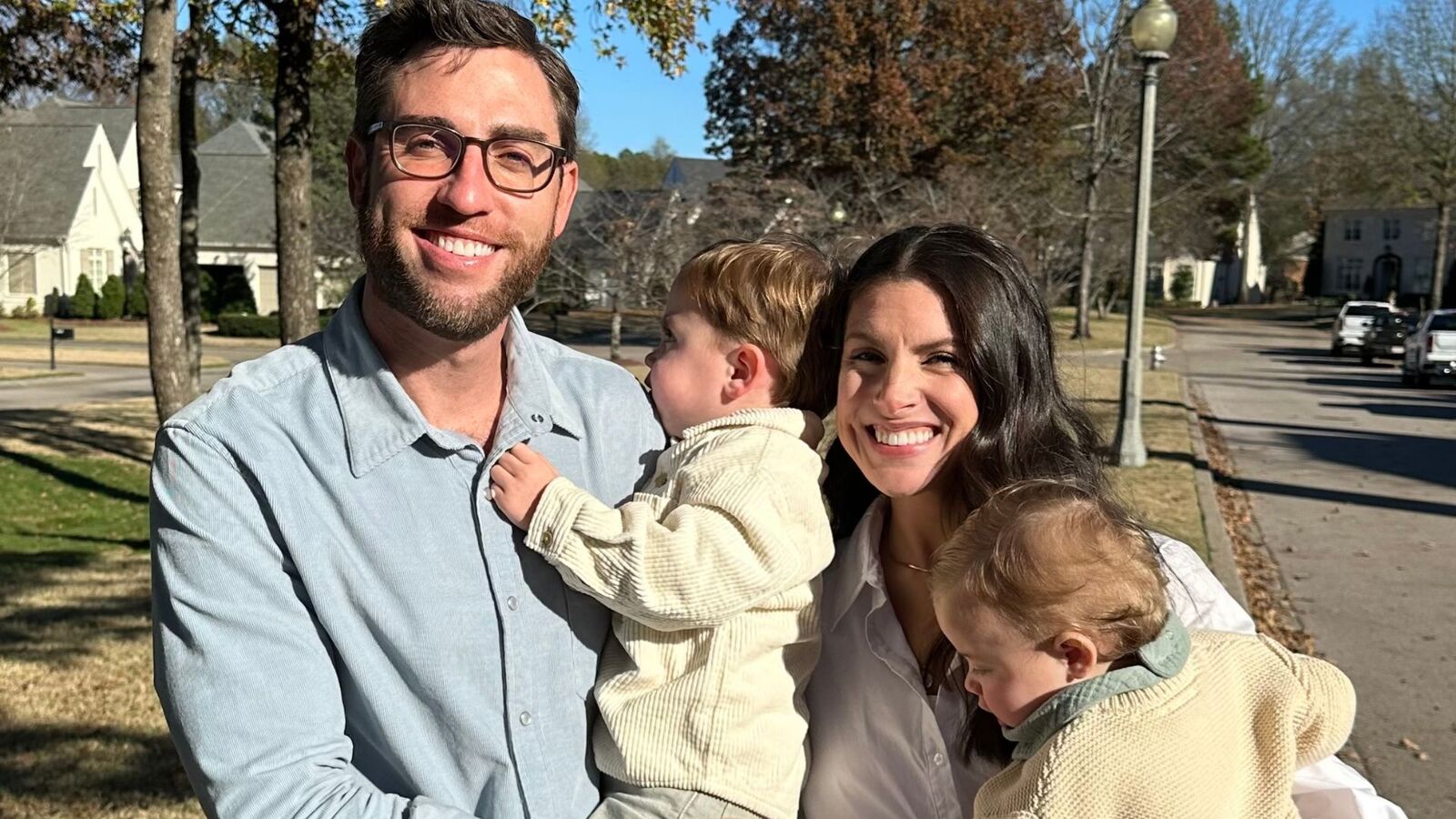
Hayley Reid was 30, an account manager for a tech recruiting company, a wife and mom of two under two, chasing after their border collie. She’s the kind of person who keeps moving. She had been with the same company for eleven years. Hayley knew how to manage a full life.
What she did not know how to manage was this pain in her head. Searching for answers, she went back to urgent care and saw an ENT. She also consulted with an optometrist who spent three hours running every available assessment, including tumor screening. He found nothing wrong. Her primary care physician referred her to a neurologist. In the meantime, Hayley pushed through her days, continuing to work and do her best for her family. “If it happened to me, I’d be on my deathbed. But moms are the strongest people. I’m proud of her,” Robbie said.
She still had no name for what was happening to her body, so Hayley and Robbie Reid started documenting her symptoms. They began searching for patterns and trying to make sense of what was happening. Within the first few results, a cerebrospinal fluid (CSF) leak surfaced as a likely explanation.
Robbie had spent years defending medical malpractice cases at a Memphis firm. He knew Semmes Murphey's reputation and had worked alongside some of their physicians. When the outside neurologist confirmed the CSF leak diagnosis and expedited the referral, Robbie already knew where they were going.
Meeting the Semmes Murphey team
Hayley met Dr. Nick Khan first. After evaluating her case, he explained, “I’m not your guy, but I know who is.” He then connected her with his colleague, Dr. Lucas Elijovich, an interventional neurologist at Semmes Murphey.
Elijovich’s approach was equally direct. “Your quality of life, your work, your kids, that’s what I care about.”
Dr. Elijovich’s plan was a percutaneous procedure to approach the leak through the groin. Once Hayley was in surgery, he identified an underlying problem: a critical artery ran directly over his intended access point. To protect her quality of life, he made the decision to stop. He later explained to the Reids that he was not comfortable proceeding that way.
October 30
The solution required additional surgery, a laminectomy performed by Dr. Khan. This involves removing a portion of the vertebra to access the dura, the protective membrane that surrounds the brain and spinal cord. Once there, Dr. Khan clipped, cauterized, and sealed the tear. This three-pronged approach is designed to make sure it never opens again. Because the procedure required shaving down the vertebra, they also fused the surrounding structure to protect the area.
Dr. Elijovich came into the operating room during the surgery to discuss the case with Dr. Khan. The Reids asked whether he could be on standby. He was there.
"We felt comfortable with each of them individually," Robbie says. "But knowing they would both be on the case made us feel more comfortable."
On February 18, 2025, Hayley's follow-up MRI confirmed what the team had hoped. The swelling was gone. The surgery had worked.
Seeking a Second Opinion
Robbie and Hayley decided to seek second opinions. After months of searching for answers, they wanted to explore every option.
At Vanderbilt, they were advised to continue with blood patches. It was a reasonable approach, but it did not fully address what they were experiencing.When a physician at Mayo Clinic reviewed her case, his response was different:
“You are already in the best hands.”
He confirmed the diagnosis and recommended surgery. For the first time in months, the path forward felt clear. They returned to Semmes Murphey ready to move ahead.
What to Know About CSF Leaks
A cerebrospinal fluid leak occurs when a tear in the dura, or a connection to a vein, develops (CSF venous fistula), allowing fluid to escape the dural sac (the covering of the spinal cord). Symptoms can include severe positional headaches that worsen when upright and improve when lying down, ear fullness or ringing, vision changes, and neck pain. Spontaneous CSF leaks can occur after physical manipulation, trauma, or sometimes without a clear cause.
Symptoms of this condition mimic ear infections, sinus issues, and other common conditions. As a result, CSF leaks are frequently misdiagnosed for months or years. If you or someone you know is experiencing persistent headaches that are worse when upright, contact your physician and ask specifically about cerebrospinal fluid leak.
Since conditions like CSF leaks are often misdiagnosed, education plays a critical role in helping patients get the right care. Through the Semmes Murphey Foundation, we support physician training, research, and community education initiatives designed to improve awareness and outcomes for complex neurological conditions.
Back to Life
Hayley is currently back to enjoying her full life of work and family. Hayley's reason for sharing her story is simple.
"If this helps one person," she says, "I'll do it."
In a case like Hayley’s, getting better takes more than toughness. It takes a care team willing to look deeper, recognize a complex problem, and act with precision.
That combination helped Hayley return to being herself again, fully back in the life she loves.
Learn more about Dr. Khan and Dr. Elijovich.